Marco Almeida
“Security, but not because WordPress is insecure. It's more secure than ever.”
Every guest answers the same five questions. We mark the line that stayed with us.
“My entire professional life has revolved around WordPress for nearly 20 years. I started publishing content online when I was 17, which naturally led me to identify the best tool for the job.”
“… In 2013 I switched to WordPress because it made no sense to keep a CMS I built when so many people were already working together on a better one. Two years later, at my first WordCamp Europe, I really understood the power of this community.”
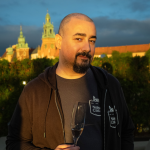
“It's paid my bills, covered half my house, and helped me find the real me.”

“… It's just that no one is looking at them. Then there's market share: we're losing it to static site generators like Astro, Hugo, or Eleventy, and now to AI.”
“Right now, WordPress's biggest hurdle is perception. Because it lacks the centralized, professional marketing of proprietary platforms, its narrative gets controlled by competitors and poorly maintained sites, obscuring the fact that, when built properly, it's still the most flexible and …”
“… I think plugin makers have a responsibility here: write clean code, ship updates, respect the user's dashboard, and earn trust instead of forcing it. That's the standard we try to hold ourselves to at WP Umbrella.”

“I just shared this at CMSConf 2026: it's the community. Leaving WordPress would mean walking away from close friends, colleagues, clients, incredible events, and years of hard-earned expertise. At this point, it's not just a platform I use… it's my home!”
“… Competitors share advice, developers help strangers for free, and you can walk up to almost anyone at a WordCamp and have a great conversation. I don't think people realize how lucky we are to work in an ecosystem like this. It's rare in tech, and it's worth protecting.”
“… While I have started to diversify beyond WordPress in order to ensure the future stability of the business and find new growth opportunities, my heart remains with WordPress and I have no intention of leaving.”

“… Agencies have had to reassure worried clients, freelancers have wondered whether to keep betting on WordPress, and contributors have walked away. None of them asked for this fight.”
“If I could change one thing about WordPress tomorrow, I would instantly drag it into the future. Even after the minor redesign of WordPress 7.0, it still feels very old-fashioned and does not have the clean, modern, user-friendly interface of …”
“… WordPress offers extraordinary flexibility, but that flexibility often comes at the cost of simplicity and consistency. We should be able to reduce complexity without sacrificing freedom.”

“… I believe the best way to tackle this is to make huge efforts to educate the public and AI tools that WordPress is the best way for an AI to build a stable website.”
“… AI is fundamentally changing how websites are created, and WordPress cannot rely solely on its historical market dominance. Its strongest competitive advantage will be its openness, flexibility and the ownership it offers businesses. Technology will evolve, but the need for digital independence will remain.”
“… Many have tried in the past and failed for the same reason: they forgot that freedom is at the heart of the WordPress project thanks to the GPL license: the freedom to run the program, the freedom to study how …”
Conversation no. 6
Aurélien Denis is the CEO of WP channel and has used WordPress since 2007. He explains why he sees a marketing problem, why he would move the project to GitHub, and why freedom keeps WordPress relevant.
What's the biggest problem with WordPress today?
I often read that WordPress's problem is mainly a matter of project governance, an outdated interface, or legacy code. There is certainly some truth to all of these observations. Nevertheless, I remain convinced that it is, above all, a marketing problem: most WordPress users are unaware of even a quarter of the possibilities offered by this wonderful tool.
What keeps you in the WordPress ecosystem?
It always comes down to humanity. I don't know of any other ecosystem that is so supportive, welcoming, and still so vibrant after more than 20 years. The events I have the opportunity to attend are always full, and the discussions are always just as insightful.
“Security, but not because WordPress is insecure. It's more secure than ever.”
“At this point, it's not just a platform I use… it's my home!”
“Most security issues people blame on "WordPress" actually start in a vulnerable or abandoned plugin.”
“The real question is how much it will still matter in 10 years, not whether it will matter at all.”
Reach on social networks changes with every algorithm update. A domain, a WordPress site and an email list stay yours.

The GPL reads like legal text. For a business, it is an exit plan.
Fewer page builders, more patterns, and a new way to hand a site over to a client.