“My entire professional life has revolved around WordPress for nearly 20 years. I started publishing content online when I was 17, which naturally led me to identify the best tool for the job. WordPress quickly emerged as the most viable solution in my view. Time has largely proven me right, despite its market share being less than 5% at the time.”
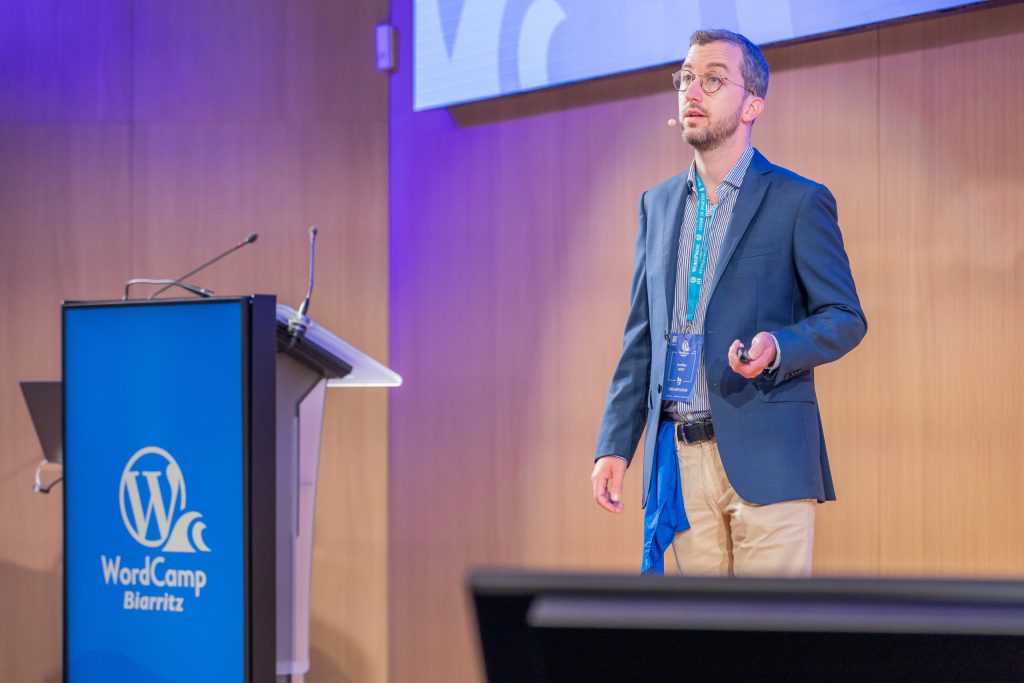
Guest
Aurélien Denis
CEO, WP channel
Aurélien Denis is the CEO of WP channel and lives in Morcenx-la-Nouvelle. He started publishing content online at 17 and has used WordPress since 2007. His professional life has revolved around WordPress for nearly 20 years.
- City
- Morcenx-la-Nouvelle
- On WordPress since
- 2007
- Profile
- Freelancer
Aurélien's five answers
Read the full conversation“I often read that WordPress's problem is mainly a matter of project governance, an outdated interface, or legacy code. There is certainly some truth to all of these observations. Nevertheless, I remain convinced that it is, above all, a marketing problem: most WordPress users are unaware of even a quarter of the possibilities offered by this wonderful tool.”
Question 3
What keeps you in the WordPress ecosystem?“It always comes down to humanity. I don't know of any other ecosystem that is so supportive, welcoming, and still so vibrant after more than 20 years. The events I have the opportunity to attend are always full, and the discussions are always just as insightful.”
“As a developer, this would involve migrating the project from SVN to GitHub to encourage more contributions. As a user, this would involve redesigning the interface with a more user-centered approach.”
Question 5
Will WordPress still matter in 10 years?“Yes, without a doubt. Millions of active websites aren't going to disappear overnight, and as of now, I don't see any serious competitor to WordPress that could serve as a viable replacement. Many have tried in the past and failed for the same reason: they forgot that freedom is at the heart of the WordPress project thanks to the GPL license: the freedom to run the program, the freedom to study how it works and adapt it to one's needs, and the freedom to redistribute it, including modified copies. And freedom can't be bought.”